

Most consumers believe that credit approval begins and ends with a single number: the credit score. In reality, underwriters rarely make decisions based on score alone. When a credit application is reviewed—especially for mortgages, auto loans, or high-limit credit products—the credit score is only an entry point. The real decision-making happens deeper inside the credit file.
Understanding what underwriters flag first when reviewing your credit file gives you a significant advantage. It shifts your focus away from chasing points and toward correcting the specific risk signals lenders actually care about. This is where many borrowers miscalculate—and where approvals quietly fall apart.
The Underwriter’s Job: Risk Detection, Not Score Admiration
An underwriter’s role is not to reward a borrower for having a decent score. Their job is to identify risk, inconsistency, and potential default signals. The credit report is reviewed as a behavioral record, not a grading system.
Underwriters evaluate how credit has been used, how obligations are managed, and whether the data being reported presents unresolved concerns. Even applicants with “good” or “very good” scores can be declined if specific red flags appear early in the review process.
The First Things Underwriters Look For (In Order)
While underwriting guidelines vary by lender, most reviews follow a predictable hierarchy. Certain items are flagged before others because they represent higher predictive risk.
1. Derogatory Accounts and Serious Negative Items
Collections, charge-offs, repossessions, foreclosures, and bankruptcies are reviewed immediately. Underwriters are trained to identify whether these negatives are recent, recurring, or unresolved.
Even a single derogatory account can outweigh a strong score if it appears recent or inaccurately reported. Underwriters will also evaluate whether negative items appear duplicated or improperly updated.
2. Payment History Patterns (Not Just Late Payments)
Underwriters look beyond isolated late payments. They analyze patterns. Repeated 30-day lates across multiple accounts, rolling delinquencies, or late payments clustered within a short timeframe signal instability.
A borrower with one old late payment is very different from a borrower with several accounts showing intermittent delinquencies—even if their scores appear similar.
3. Credit Utilization and Balance Distribution
Utilization is not evaluated globally. Underwriters examine how balances are distributed across accounts. Maxed-out cards, even when overall utilization is acceptable, can trigger concern.
High utilization on revolving accounts suggests dependency on credit rather than strategic usage. This directly affects approval odds.
4. Recent Inquiries and Credit Velocity
Hard inquiries are reviewed for timing and frequency. A cluster of recent inquiries signals potential financial stress or aggressive credit seeking.
Underwriters assess whether inquiries align with legitimate shopping behavior or indicate instability across multiple credit types.
5. Disputed Accounts and Reporting Inconsistencies
Active disputes receive close attention. While disputing inaccurate information is a consumer right, unresolved disputes during underwriting can stall or downgrade applications.
Underwriters prioritize clarity. Conflicting balances, mismatched dates, or duplicate tradelines increase scrutiny.
What Underwriters Ignore (That Consumers Obsess Over)
Many borrowers focus on factors that underwriters barely consider in isolation.
- Minor score fluctuations
- Old closed accounts with clean history
- Soft inquiries
- Perfect utilization ratios on paper
These elements matter far less than unresolved negatives, data accuracy, and recent behavior.
The Real Reason Applications Stall After Review
Most credit applications are not instantly declined. They stall. This occurs when underwriters identify issues requiring clarification, documentation, or correction.
- Unverified derogatory accounts
- Accounts reporting conflicting information
- Active disputes without resolution
- Recent negative updates during review
At this stage, lenders may pause the file, downgrade the offer, or request additional documentation.
How Data Accuracy Impacts Underwriting Decisions
Underwriters rely on the assumption that credit data is accurate. When inaccuracies appear, confidence erodes quickly.
According to research published by the Consumer Financial Protection Bureau, credit reporting errors remain widespread and often go uncorrected.
Reporting standards such as Metro 2 exist to ensure accuracy, yet inconsistencies persist across bureaus and data furnishers.
Why Fixing the Right Items Matters More Than Raising Your Score
Correcting or removing a single high-risk negative account often matters more than increasing a score by 20 points.
Underwriters respond to resolution. A corrected charge-off or removed duplicate collection changes the risk profile immediately.
How Dispute Beast Aligns With Underwriter Expectations
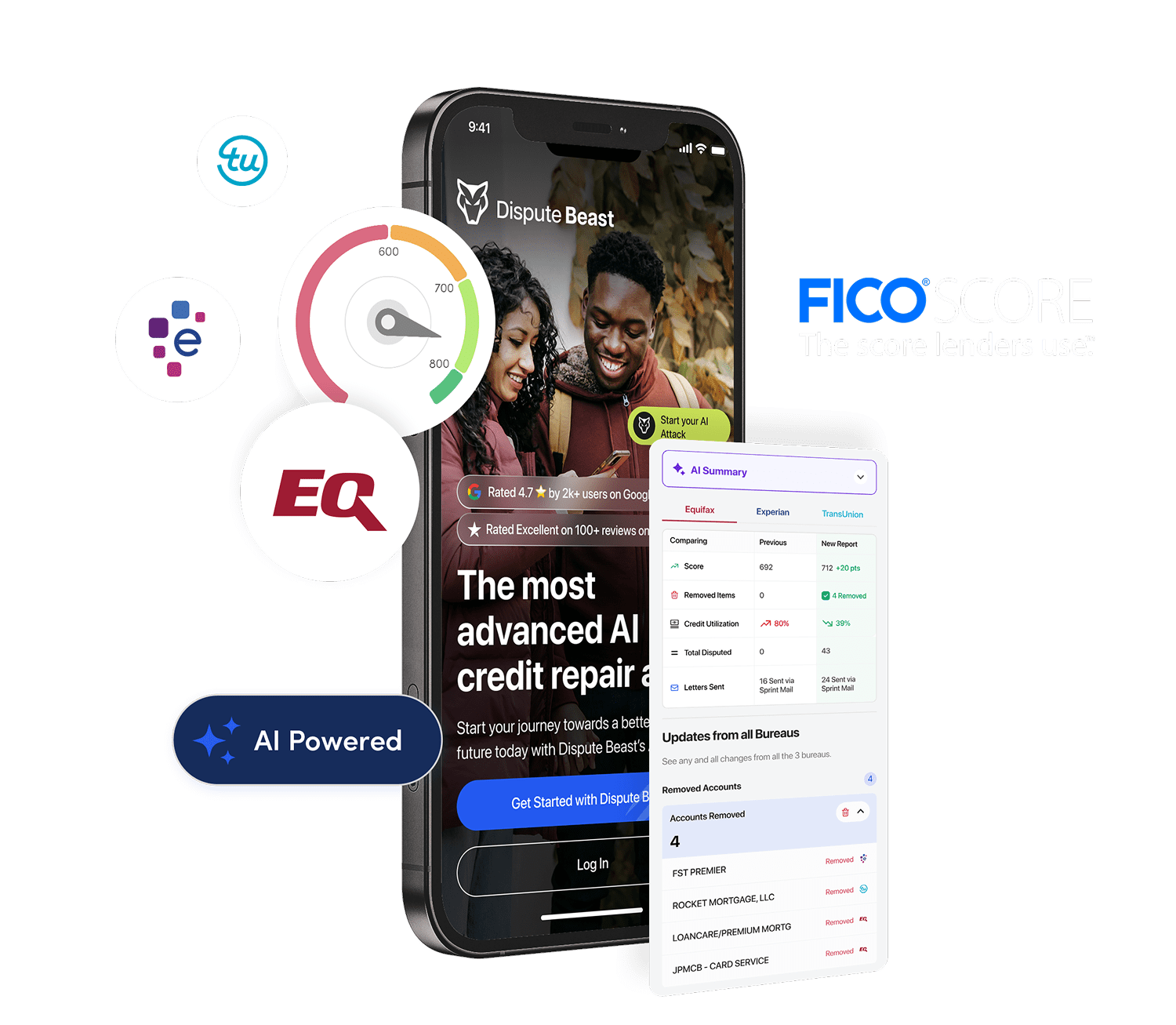
Dispute Beast is built around how credit data is reviewed—not how consumers are marketed to. Instead of relying on generic templates, it focuses on accuracy, compliance, and structured dispute cycles.
By disputing inaccuracies across bureaus and data furnishers in compliant 40-day cycles, Dispute Beast addresses the exact issues underwriters flag first.
This approach prioritizes data integrity over superficial score gains.
How Underwriters Compare Risk Across Similar Applicants
When applicants have comparable scores, underwriters look for differentiators inside the credit file.
- Stability of payment history
- Resolution of past negatives
- Consistency in reporting
- Absence of duplicated data
Borrowers who resolve inaccuracies demonstrate financial awareness and lower risk.
The Cost of Leaving Errors Unchallenged
Small errors are not small to lenders. An outdated balance or incorrect status can increase perceived risk.
As outlined in Experian’s credit reporting overview, inaccuracies can directly influence lending outcomes.
Why Timing Matters During Active Applications
Negative updates during an active application window can halt approvals instantly. Resolved items may take time to reflect across all bureaus.
This timing gap explains why proactive credit file maintenance matters.
Manual Review vs Automated Pre-Screening
Most lenders use automated systems to pre-screen applicants before a person ever touches the file. This is where many approvals are quietly won or lost. Automated underwriting engines look for patterns that correlate with higher default risk: rapid credit seeking, unstable utilization, unresolved derogatories, identity mismatches, and inconsistent reporting across bureaus. If the system flags uncertainty, the file gets routed into a manual review queue.
Manual review is slower and stricter. It usually means the lender wants more evidence that the file is accurate and the borrower is stable. The underwriter’s job is not to “find a reason to approve,” but to confirm that the risk in the file can be priced and justified under policy. The cleaner and more consistent your report is, the more likely you are to pass the automated layer and avoid a deep manual dive.
What Underwriters Mean by “Credit File Quality”
Underwriters think in terms of file quality: how trustworthy, consistent, and complete the record appears. A file can be “high score, low quality” if it contains contradictions, missing data, unresolved disputes, or suspicious timing. Conversely, a file can be “moderate score, high quality” if it is consistent, stable, and free of major red flags. File quality influences approval speed, required documentation, and the final terms offered.
High-quality files typically show:
- Stable reporting across all three bureaus
- Clear account statuses (open/closed/paid/charged-off) without contradictions
- Predictable utilization and payment behavior
- Minimal recent inquiry stacking
- Resolved negatives with clear end states
Why One High-Impact Error Can Outweigh a “Good” Score
Many borrowers underestimate the weight of a single severe negative item or a single high-impact reporting error. Underwriting models frequently treat certain red flags as decision-dominant. For example, an incorrectly reported charge-off, a duplicated collection, or an account showing late payments that never occurred can trigger manual review, require explanations, or result in automatic decline rules depending on the lender.
This is why underwriters often focus on “risk drivers” instead of overall score movement. A score can remain relatively stable even while a major red flag exists. Underwriters will still flag it first because it signals loss risk.
How Underwriters Interpret “Recent Activity”
Recency matters because it predicts near-term behavior. Underwriters care about what has happened in the last 30, 60, and 90 days. A file that looks stable over years but shows sudden changes—new accounts, rising balances, multiple inquiries—can be treated as transitioning into higher risk. Even if the score has not dropped yet, recent activity can reduce approval odds.
Examples of recent activity patterns that raise concern include:
- Multiple inquiries across different categories within a short window
- Rapid balance growth on revolving accounts
- New derogatories or collections reporting during an application window
- Disputes filed right before applying without time for resolution
When Disputes Help vs When Disputes Hurt Approval Odds
Disputing inaccurate information is often necessary, but timing matters. Underwriters may pause a file if they cannot confirm what the final, accurate data will be. In some lending programs, disputed accounts may be excluded from calculations until verified, which can change how debt-to-income or payment burdens are evaluated. In other cases, lenders may request that disputes be withdrawn or resolved prior to closing.
The key is to resolve disputes before applying when possible, so the file reflects the corrected outcome and has time to stabilize across bureaus.
How Credit “Narrative” Shapes Underwriting Confidence
Underwriting is not storytelling, but it is interpretation. Underwriters evaluate the narrative your report implies: stable borrower, trending risk, inconsistent reporter, or incomplete file. A consistent report tells a clear narrative. A contradictory report forces conservative interpretation. When in doubt, lenders choose the option that protects the portfolio.
That is why data integrity is so powerful. If your report is accurate and consistent, the narrative becomes predictable—and predictable files get approved more often.
What Underwriters Flag in Revolving Credit Behavior
Revolving accounts (credit cards, lines of credit) often reveal the borrower’s real-time financial behavior. Underwriters look at whether balances are managed or whether credit is used as income replacement. Two borrowers can have the same utilization percentage, but the balance pattern can signal different risk.
Underwriters commonly flag:
- Maxed-out individual cards even if overall utilization is moderate
- Balances that grow each month without paydown
- Multiple cards near limit at the same time
- Cash-advance activity, where visible
This is why balance distribution and trend are more important than a single utilization ratio.
How Underwriters Treat Installment Debt and Payment Burden
Installment accounts (auto loans, personal loans, student loans) are evaluated for payment burden and stability. Underwriters want to see that installment obligations are manageable relative to income. If installment payments are high and revolving usage is also high, the file signals financial strain.
Even when you are current, high payment burden can reduce approval odds or worsen terms, especially in manual underwriting.
How Dispute Beast Fits (Without the Hard Sell)
When underwriters flag issues, the fastest path to better approval odds is not chasing a score—it’s correcting the data that is creating risk. Dispute Beast is designed to help users identify and challenge inaccurate negative items and reporting problems that lenders flag early. Instead of generic templates, it uses structured, compliance-based dispute logic and repeatable cycles to push toward cleaner, more consistent reporting outcomes.
If you’re already working through disputes and want to understand the broader process, the credit dispute process article explains the basics in detail. If you want a structured approach to credit improvement overall, the credit repair process pillar is the best starting point.
Practical Takeaways: How to Think Like an Underwriter Before You Apply
You don’t need to become an expert underwriter to benefit from underwriting logic. You just need to stop focusing on what feels intuitive (score points) and focus on what reduces uncertainty (accuracy and stability).
Before you apply, ask:
- Are there any unresolved derogatories that look recent or duplicated?
- Do my accounts report consistently across bureaus?
- Is my recent inquiry activity calm and explainable?
- Are my revolving balances stable and trending down?
- Do I have disputes pending that could freeze underwriting?
When those answers are clean, approvals become smoother. When they’re not, underwriting slows down—and silence, stalls, or declines become more likely.
Conclusion: Approval Is About Confidence, Not Perfection
Underwriters are not searching for perfect borrowers. They are searching for predictable ones. If your credit file is accurate, consistent, and stable, lenders can price the risk with confidence. That confidence is what unlocks approvals and better terms.
Credit scores open the door. Credit profiles determine whether you walk through it.