
Most people think credit report errors are “small” problems—something you correct later, or something that only matters if it drops your credit score. But lenders don’t underwrite based on your score alone. They underwrite based on the story your credit report tells.
That’s why some “minor-looking” errors can quietly destroy approval odds. A single misreported late payment, an incorrect balance, or a wrong account status can flip your profile from “low risk” to “high risk,” even if your score still looks decent.
This guide focuses on the credit report errors lenders care about most—the ones that commonly block approvals, trigger manual review, raise pricing, or cause instant declines. We’re not talking about cosmetic issues. We’re talking about lender red flags.
If you want a broader overview of credit report errors in general, start here: credit report errors you must dispute immediately.
Why These Errors Matter More Than “Score Drops”
Lenders evaluate credit reports to answer a few key questions:
- Is this applicant’s credit data accurate and verifiable?
- Is there any sign of recent repayment stress?
- Does the file contain high-risk markers that predict default?
- Is the applicant’s profile stable—or changing rapidly?
Many errors don’t just “hurt your score.” They create the wrong risk profile.
And because lenders typically pull reports directly from the bureaus, the only version of your story that matters is what’s reporting when they run the application.
To understand how credit reporting disputes work at a high level, the CFPB’s guidance on disputing credit report errors is a useful official reference.
Quick Table: Error → Impact → Lender Risk
| Error | Approval Impact | Lender Risk Signal |
|---|---|---|
| Misreported late payment | High | Recent delinquency / missed obligations |
| Wrong balance or credit limit | High | High utilization / liquidity stress |
| Account status reported incorrectly | High | Unresolved default / active derogatory status |
| Collections/charge-offs reported inaccurately | High | Unpaid severe delinquency |
| Duplicate tradelines or duplicated collections | Medium–High | Higher debt burden than reality |
| Mixed file / wrong identity data | Very High | Identity risk / inconsistent borrower profile |
| Unauthorized hard inquiries | Medium–High | Credit-seeking velocity / potential fraud |
1) Misreported Late Payments
If you want one category of errors that lenders treat as a near-instant risk marker, it’s late payments—especially if they appear recent.
From a lender’s perspective, a late payment suggests:
- Cash flow instability
- Higher probability of future delinquency
- Reduced willingness to prioritize repayment
Even a single “30-day late” can change pricing or trigger a decline, depending on the product. Mortgage and auto underwriting, in particular, may react strongly to recent late payments, regardless of the score.
What to check
- Payment history grids for each tradeline
- The “Date of first delinquency” if shown
- Whether the reported delinquency matches your statements/receipts
What documentation helps
- Bank statements showing the payment cleared
- Creditor account statements
- Confirmation emails or receipts
Because late payments are high-impact, they’re a perfect example of why “monitoring alerts” alone aren’t enough. You need analysis that flags which negatives are likely inaccurate and high priority.
2) Wrong Balance or Credit Limit (Utilization Errors)
Lenders don’t just look at your score. They look at how much revolving credit you’re using right now. That’s why incorrect balances or wrong limits can be approval killers.
If your balance is reported too high (or your limit too low), your utilization looks worse than it is. This can trigger lender thresholds even when your score hasn’t fully reflected the change.
Utilization is heavily discussed in consumer scoring resources like Experian’s credit utilization education, but underwriting often goes further than consumer advice. Many lenders have internal “utilization caps” for approval.
Why lenders care
- High utilization can signal short-term liquidity stress
- Rapid balance growth can suggest worsening finances
- Maxed cards may indicate elevated default probability
What to check
- Reported balance vs your last statement balance
- Reported limit vs actual limit
- Whether the bureau is showing an outdated snapshot
What documentation helps
- Most recent account statement
- Screenshot or letter showing credit limit
- Transaction history if needed
3) Incorrect Account Status (Open/Closed, Paid/Unpaid, Current/Charged-Off)
Account status codes are underwriting shorthand. They tell lenders, “What is happening with this account right now?”
When status is wrong, underwriting can interpret the account as an active negative even if you resolved it months (or years) ago.
Examples that commonly trigger lender red flags:
- Paid account still reporting as unpaid
- Closed account still reporting as open
- Settled debt still reporting as “charged-off” without correct notes
- Account marked “in collections” even after resolution
Why lenders care
- Status errors can inflate debt obligations
- They can suggest unresolved defaults
- They create confusion in manual underwriting review
What to check
- Account status line (e.g., “open,” “closed,” “paid,” “charged off”)
- Current balance and past due fields
- Remarks (e.g., “paid,” “settled,” “transferred,” “sold”)
What documentation helps
- Payoff letter or settlement confirmation
- Creditor letter confirming account closure
- Receipt of final payment
4) Collections and Charge-Offs Reported Inaccurately
Collections and charge-offs are among the most powerful approval blockers. Even if your score looks “okay,” lenders treat these as serious negative signals—especially if they appear recent or unresolved.
But here’s what many borrowers don’t realize: collections and charge-offs are also commonly misreported.
Common accuracy problems include:
- Wrong balance amounts
- Wrong dates (making items appear newer than they are)
- Duplicate reporting across multiple collectors
- Missing verification details
- Incorrect status after payment
The FTC’s overview of the Fair Credit Reporting Act explains that consumers have rights to dispute inaccurate reporting. You don’t need to treat this as a legal blog to understand the core reality: inaccurate negative reporting can materially change underwriting outcomes.
Why lenders care
- Signals severe delinquency
- Suggests unresolved obligations
- Triggers stricter underwriting rules
What to check
- Original creditor name vs collection agency name
- Dates (opened, last activity, first delinquency)
- Status and whether it matches reality
What documentation helps
- Payment confirmation if paid
- Settlement agreement
- Letters from the collector/creditor
5) Duplicate Tradelines (Including Duplicate Collections)
Duplicate tradelines are more than an annoyance. To lenders, duplication can make it look like you have more debt, more delinquency, or more unresolved accounts than you actually do.
Duplication can show up as:
- The same account appearing twice under slightly different names
- A collection that remains after the debt was transferred or sold
- An original creditor tradeline plus multiple collection tradelines for the same obligation
Even when the score impact seems moderate, underwriting can react strongly because duplication changes the apparent severity and frequency of negative events.
Why lenders care
- Inflates perceived obligations
- Increases apparent delinquency frequency
- Triggers manual review delays
What to check
- Account numbers (partial) and creditor names
- Dates and balances that match too closely
- Whether the tradelines refer to the same original debt
What documentation helps
- Statements showing a single account exists
- Letters showing transfer/sale of the account
- Collector communications identifying the original account
6) Mixed Files and Wrong Identity Data (Name, Address, SSN Variations)
This is the most dangerous category for approvals: a mixed file. A mixed file occurs when data from another person’s credit file is attached to yours due to similar identifiers.
Mixed-file indicators include:
- Accounts you don’t recognize
- Addresses where you never lived
- Employers you never worked for
- Name variations that aren’t yours
Lenders treat identity inconsistencies as major risk. It can indicate potential fraud, a compromised identity, or a file the lender can’t trust.
For official consumer guidance on identity-related issues, the IdentityTheft.gov identity recovery resource can be helpful.
Why lenders care
- Identity risk increases fraud and loss risk
- Inconsistent files reduce underwriting confidence
- Can trigger automatic verification holds or declines
What to check
- Personal information section across all three bureaus
- Address history and employer history
- Accounts not linked to your known history
What documentation helps
- Government ID
- Proof of address (utility bill, lease, etc.)
- Affidavit statements if needed
7) Unauthorized Hard Inquiries
Hard inquiries can be normal when you apply for credit. But unauthorized hard inquiries are different—and lenders can treat inquiry spikes as a sign of instability or potential fraud.
Even if inquiry impact on the score is limited, lenders care about what the pattern suggests: increased credit seeking, potential overextension, or identity risk.
If you’re not sure how inquiries work, a strong reference is the CFPB’s explanation of credit inquiries.
Why lenders care
- Inquiry stacking reduces approval confidence
- Unauthorized pulls can indicate identity risk
- Recent inquiries can change the lender’s internal risk score
What to check
- Inquiries you don’t recognize
- Multiple inquiries from similar lender types
- Inquiry dates clustered together
What documentation helps
- Proof you didn’t authorize the application (context-specific)
- Identity theft documentation if applicable
- Dispute notes and your report screenshots
To understand the “how” of inquiry disputes at a deeper level, see how to dispute a hard inquiry.
What Makes These Errors “Approval Blockers” vs Cosmetic Issues?
Not every error matters to lenders. Cosmetic errors (like a slightly outdated address) may not change underwriting outcomes. Approval blockers do.
These seven categories matter because they typically affect at least one of the lender’s core underwriting concerns:
- Ability to repay: utilization, balances, payment reliability
- Willingness to repay: derogatories, collections, recent late pays
- Identity reliability: mixed files, unauthorized activity
- Data integrity: duplication, incorrect status, conflicting records
In other words, approval blockers don’t just lower scores. They change the lender’s interpretation of who you are as a borrower.
How Dispute Beast Helps You Catch the Errors Lenders Hate
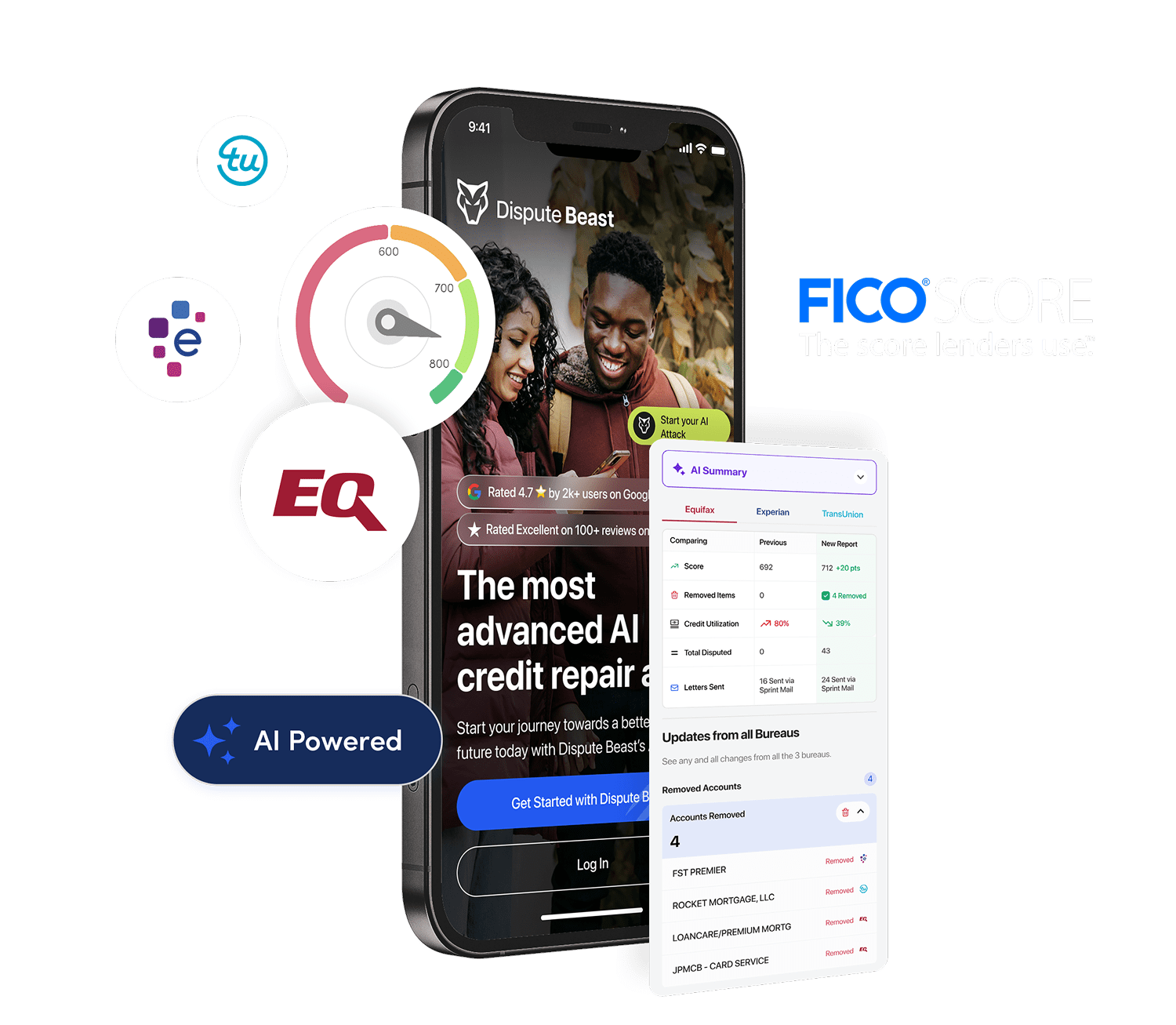
Dispute Beast is the most advanced DIY credit repair software built for structured, compliant dispute cycles—because credit cleanup is not a one-time event. It’s a process.
Here’s the key difference: Dispute Beast doesn’t just generate letters. It helps users identify, prioritize, and attack inaccurate negative items using automation and compliance-based workflows.
- AI-assisted analysis helps flag high-impact inaccuracies that lenders care about most
- A three-level dispute strategy targets bureaus, data furnishers/creditors, and secondary bureaus
- 40-day attack cycles support repeat rounds so results compound over time
- Letters are built using compliance-based disputing aligned with FCRA timelines and reporting standards
If you want the AI-focused approach to catching issues before you apply, read AI credit report error detection.
Final Thoughts: Lenders Don’t Judge You—They Judge Your Data
Loan approvals are not decided by how “good” your score looks in isolation. They’re decided by whether the lender can trust your report and whether your file contains high-risk markers that predict losses.
That’s why the most important credit strategy in 2026 isn’t chasing points. It’s eliminating the reporting issues that create false risk.
If you suspect your credit report contains any of these high-impact errors, don’t wait until after a rejection to address it. Start by understanding which issues matter most—and then keep attacking them in a structured, compliant way.
Next steps:
- Read the Ultimate Dispute Beast FAQ for answers to common questions
- Get your free Dispute Beast account and start sending your attacks with the press of 1 button at DisputeBeast.com
- Keep Attacking Every 40 Days so new negatives are challenged as they appear