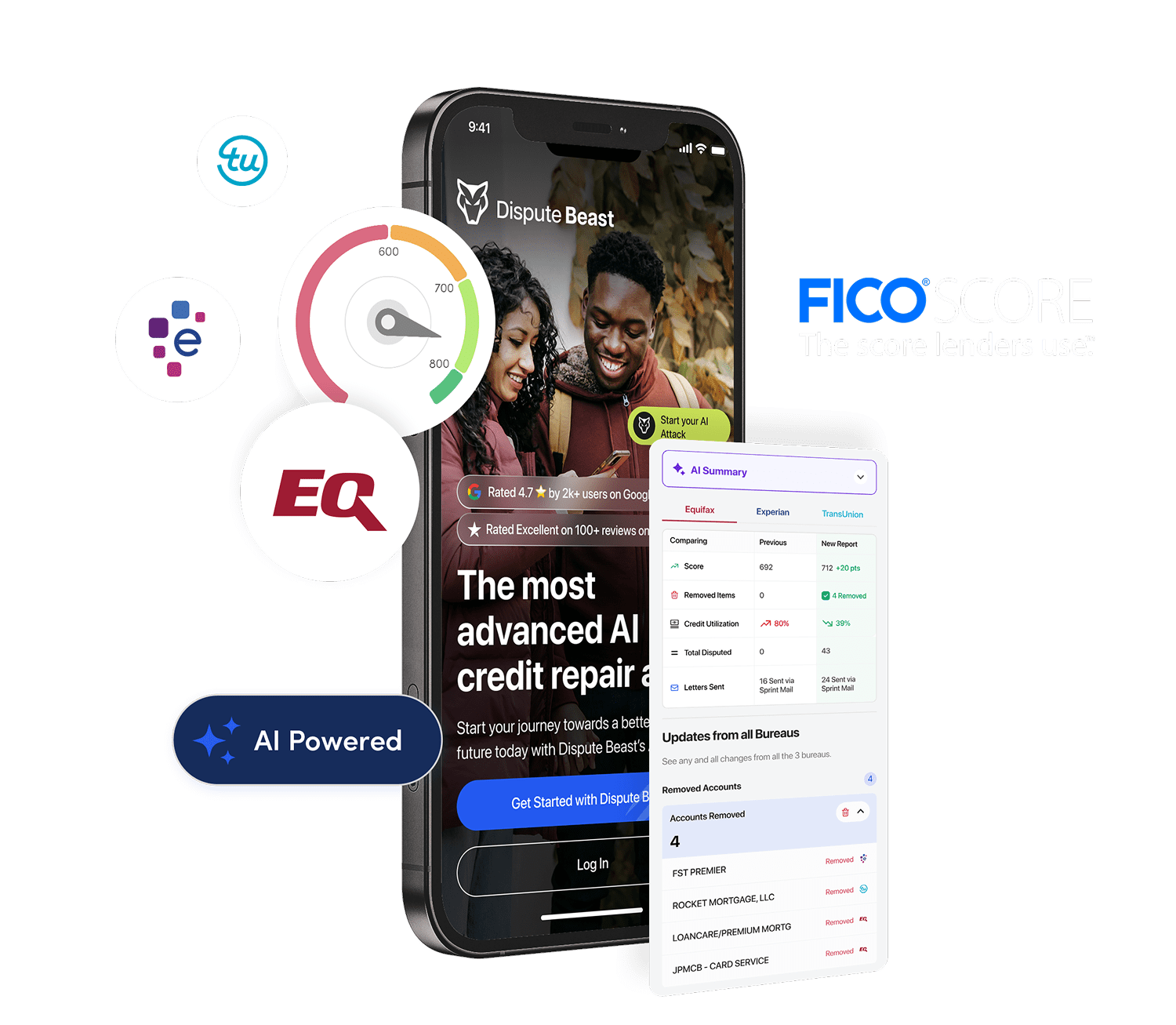


AI credit repair is booming. More people than ever are using AI generators, automated apps, and template tools to dispute credit report errors. But here’s the uncomfortable truth:
Most AI-generated disputes fail in 2026 because people use the wrong tools the wrong way.
Cheap templates, simple letter generators, and non-compliant AI models create disputes that bureaus ignore, flag as frivolous, or reject outright. And because the 2026 FCRA updates raised verification standards, weak AI disputes fail even faster.
This guide exposes the most common AI disputing mistakes — and more importantly — shows you how to avoid them by using compliant, structured AI systems designed specifically for credit repair.
For a full walkthrough of the correct dispute flow, see the AI workflow guide here: AI credit dispute process.
Why AI Disputing Fails for Most People (and Why It’s Not the AI’s Fault)
2026 credit reporting standards require disputes to be:
- Specific
- Factual
- Personalized
- Compliant with Metro 2
- Supported with documentation when needed
Most generic AI tools don’t meet any of these requirements. Instead, they produce the same type of template letters bureaus have been ignoring for years.
AI itself isn’t the problem — it’s the wrong type of AI used incorrectly.
Mistake #1: Using Generic AI Models Not Designed for Credit Disputes
Chatbots and general-purpose AI tools can generate content, but they cannot produce compliant Metro 2–aligned disputes by default. When consumers ask these tools to “write a dispute letter,” the result is:
- Generic wording
- No factual specificity
- No reference to consumer laws
- No mention of data points actually reported on the file
Bureaus immediately identify these as template disputes and often mark them as frivolous.
To avoid this, use a system built specifically for this workflow — not a general chatbot.
Mistake #2: Relying on Cheap Apps and Letter Generators
The internet is full of “AI dispute letter apps” that promise fast results. Most of them do the exact opposite. Their disputes fail because they:
- Do not scan all three bureaus
- Do not identify pattern mismatches
- Do not reference Metro 2 fields
- Do not personalize disputes
- Do not track dispute rounds or deadlines
The result? Low-quality disputes that often make the account harder to dispute later.
This is why platforms like Dispute Beast use a structured, compliance-driven approach rather than templates or superficial AI prompts.
Mistake #3: Sending the Same AI Letter to All Three Bureaus
Each credit bureau — Experian, Equifax, and TransUnion — reports data differently. Even a small mismatch in:
- dates
- balances
- account status
- past-due amounts
changes the structure of the dispute argument.
Sending one generic letter to all bureaus is one of the fastest ways to get flagged. The bureaus know your report isn’t identical — so your disputes shouldn’t be either.
This is why Dispute Beast generates bureau-specific strategies and letters for every round.
Mistake #4: Not Providing Enough Specific Detail in the Dispute
Post-2026 credit bureaus now require much higher specificity when reviewing disputes. That means you must identify:
- the exact data field that is inaccurate, incomplete, or unverifiable
- the conflicting data from your other reports
- the specific reason the data violates federal reporting standards
AI tools that “guess” the error or rely on surface-level analysis produce letters that fail instantly.
The CFPB’s credit market report emphasizes the importance of accuracy in dispute submissions—bureaus must see clear factual arguments.
Mistake #5: Using AI That Hallucinates Information
One of the biggest dangers of general AI in credit repair is hallucination — when the model invents facts. If a letter includes any incorrect information, the bureau can mark it as frivolous or irrelevant.
Hallucinated details include:
- incorrect dates
- false legal citations
- non-existent account numbers
- laws inaccurately applied
Compliance-driven AI like Dispute Beast doesn’t hallucinate because it only uses the data pulled directly from your credit report.
Mistake #6: Not Following a Structured Multi-Round Dispute Process
Most consumers send one letter, wait, and then give up — or send the same letter again, which hurts the case.
Successful dispute workflows follow a structured cycle:
- Scan report data
- Identify discrepancies
- Draft a Metro 2–aligned dispute
- Send bureau-specific letters
- Wait for 30–40 days
- Analyze new report
- Start a new round if needed
This process continues until the data is corrected or deleted. Without a structured dispute cycle, success rates drop sharply.
Learn how the full process works here: AI dispute workflow.
Mistake #7: Using AI Without Understanding Compliance Rules
Metro 2 formatting FCRA requirements Furnisher obligations Verification timelines Dispute code interactions
These matter more than ever due to regulatory updates.
When disputes violate these standards, bureaus reject them quickly. AI tools that don’t understand compliance produce letters that look professional but fail in real-world use.
Mistake #8: Not Attaching Documentation When Necessary
AI tools often skip documenting supporting evidence — even when required by law or bureau policy.
Examples of needed documentation include:
- bank statements to verify payments
- ID documents for fraud claims
- settlement letters
- proof of account closure
- police reports for identity theft disputes
AI alone cannot fix everything — the dispute must be complete, accurate, and supported.
Mistake #9: Treating All Errors Equally
AI tools that blindly dispute everything do more harm than good. Different errors have different impact levels:
- Late payments cause major score drops
- Duplicate collections create risk patterns
- Incorrect balances inflate utilization
- Wrong delinquency dates can extend derogatory timelines
- Unauthorized inquiries hurt approval odds
Effective AI tools — like Dispute Beast — prioritize disputes based on score impact and lender sensitivity, not volume.
Mistake #10: Not Understanding What Lenders Actually Look For
Even if your disputes are successful, lenders look for:
- consistency across bureaus
- stability in utilization
- clean payment history
- absence of dispute flags
- limited recent inquiries
This is why weak or incomplete disputes don’t help — and sometimes make things worse.
How to Avoid All AI Disputing Mistakes in 2026
You avoid these mistakes by using systems built specifically for compliant Metro 2 disputing — not generic chatbots or cheap apps.
✔ Use AI That Reads Your Entire Credit File
Dispute Beast scans all three bureaus and identifies errors using real data — not assumptions.
✔ Use AI That Generates Metro 2–Aligned Disputes
No hallucinations. No templates. Only compliant factual disputes.
✔ Follow a Structured Multi-Round Process
Dispute Beast automates the 40-day attack cycle to ensure consistency.
✔ Prioritize the Highest-Impact Errors First
The system shows which errors lenders hate the most — and automatically targets them.
How Dispute Beast Solves Every AI Mistake on This List
Dispute Beast was built to fix the biggest weaknesses in the AI credit repair world. Unlike general chatbots or template tools, it operates like an automated compliance expert.
- Reads your real credit data directly from all bureaus
- Detects high-impact errors using rule-based and AI-driven analysis
- Generates bureau-specific letters based on Metro 2 formatting
- Runs 40-day dispute cycles automatically
- Provides audit trails and progress tracking
- Eliminates guesswork and prevents frivolous disputes
If you want to understand the full technical workflow, review the detailed guide here: AI credit dispute workflow.
Final Thoughts: AI Doesn’t Fail — The Wrong AI Fails
The biggest mistake consumers make is assuming all AI tools are the same. They’re not.
General-purpose AI writes letters. Cheap apps send templates. Weak tools hallucinate data. Unstructured systems skip compliance.
Dispute Beast does the opposite. It follows the real rules of credit reporting — Metro 2, FCRA, FDCPA — and automates everything the right way.
2026 credit repair isn’t about “AI letters.” It’s about AI compliance, AI accuracy, and AI workflow.
Use the right AI, avoid the mistakes above, and your dispute success rate improves dramatically — without risking frivolous flags or wasted dispute rounds.