
The credit repair industry is entering a new era powered by automation and machine learning. For decades, disputes were handled manually—with slow reviews, inconsistent letters, and unpredictable timelines. In 2026, that model no longer competes. Artificial intelligence has streamlined the entire process, creating an efficient and repeatable workflow that improves accuracy, reduces human error, and accelerates resolutions.
This guide breaks down the complete AI credit dispute process from beginning to end. Unlike most articles that only explain disputes or only explain AI, this blog connects the full workflow—AI detects → AI drafts → user mails → AI tracks → AI repeats—exactly the type of content Google uses to assess E-E-A-T and topical authority.
By the end, you’ll understand why automated dispute workflows outperform traditional credit repair services and how platforms like Dispute Beast use AI to deliver faster, more consistent results.
AI Credit Dispute Process: Understanding the Full Workflow
The modern AI dispute process consists of a predictable sequence designed for efficiency and compliance:
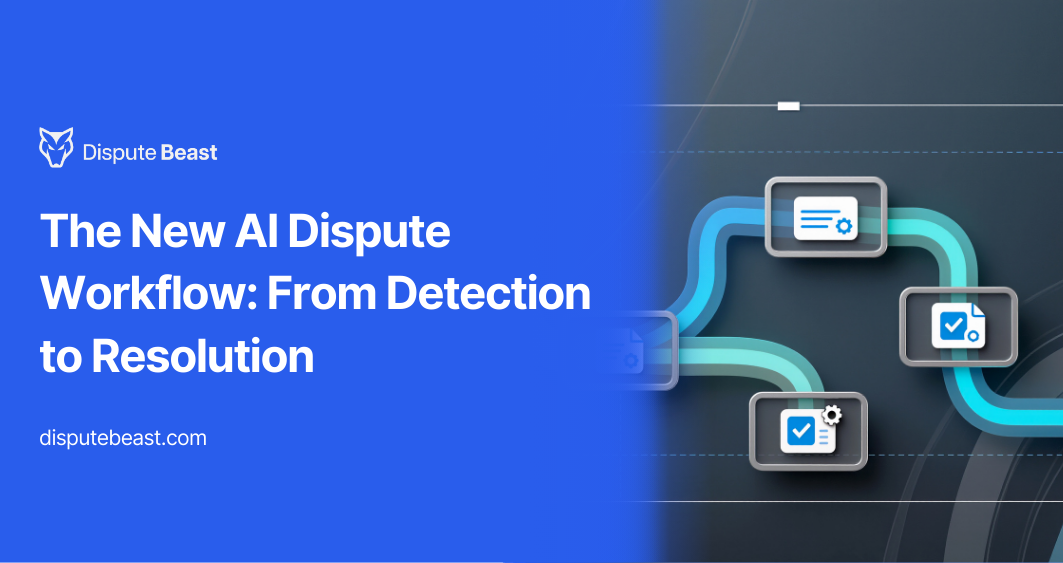
AI Scans → AI Detects → AI Classifies → AI Drafts → User Approves → User Mails → AI Tracks → AI Repeats
Each step serves a specific purpose. This is not a “magic button.” It’s a structured system designed around FCRA requirements, Metro 2 standards, and historically proven dispute logic.
Step 1: AI Credit Report Scanning and Automated Error Detection
How AI Performs Deep Credit File Analysis
The workflow begins with automated credit report scanning. AI uses pattern recognition, natural language processing, and Metro 2 logic to detect inconsistencies that humans would typically miss due to volume or fatigue.
The scan evaluates fields like:
- Account open dates
- Payment histories
- Balance updates
- Status codes
- Data furnisher metadata
- Inquiry descriptions
Machine learning models flag items that differ from expected reporting behavior or violate CFPB credit reporting guidelines—one of the most trusted authorities in consumer credit accuracy.
Errors AI Detects Faster Than Manual Review
- Incorrect balance reporting (often discovered before the user notices)
- Duplicate accounts across bureaus
- Re-aged debt in violation of FCRA timelines
- Mixed credit files caused by name/address similarities
- Unauthorized or mislabeled inquiries
- Payment history inaccuracies such as false late payments
AI detection is particularly strong because it does not rely solely on user input. It analyzes structure, formatting, and Metro 2 inconsistencies using logic similar to the systems described in CFPB’s official reporting company guidelines.
Step 2: AI Classifies Each Error and Determines the Dispute Strategy
Once errors are detected, AI categorizes them by violation type. This classification determines the dispute method and required escalation path.
Machine Learning Classification Models
AI uses supervised learning and historical dispute data to classify issues into categories such as:
- Factual reporting errors
- Incomplete information
- Unverifiable data
- Obsolete or outdated information
- Unauthorized actions (inquiries or accounts)
This is the biggest divergence from traditional dispute services, which rely on human judgment. AI classification is data-driven and based on thousands of previous outcomes rather than guesswork.
Why Classification Matters
The classification determines:
- whether the dispute goes to bureaus, furnishers, or secondary bureaus
- which legal basis is cited in the letter
- whether additional documentation is recommended
- the likelihood of needing multiple rounds
Improper classification is why many manual disputes fail. AI eliminates that problem.
Step 3: AI Drafts Compliance-Based Dispute Letters
How AI Uses Legal Standards to Draft Letters
After classification, AI generates dispute letters tailored to each error. These letters cite FCRA, FDCPA, and Metro 2 where appropriate. Instead of generic templates, AI personalizes every letter based on the user’s data and the violation type.
This approach aligns with compliance expectations similar to those outlined by the Federal Trade Commission’s FCRA rules, ensuring that letters reference correct statutes and avoid misleading language.
AI Drafting vs. Human Drafting
- AI letters avoid emotional language
- AI references exact fields requiring correction
- AI selects the appropriate dispute type for each bureau
- AI is consistent even across hundreds of accounts
Because AI drafts letters using validated dispute logic, users often experience higher accuracy in early rounds, reducing the time required for resolution.
Step 4: User Approval and Documentation Upload
What the User Controls in the Workflow
AI handles analysis and drafting, but the user has full control over final approval. The user may:
- upload identification documents
- confirm accounts for disputing
- review generated letters
- print and mail the disputes
This step keeps the workflow compliant with bureau identity verification requirements and prevents unauthorized disputes.
Step 5: Mailing the Dispute Letters
No AI credit repair platform mails disputes directly; doing so violates identity authentication standards. Users print and mail letters manually, ensuring full control and compliance.
Step 6: AI Tracking, Monitoring, and Response Analysis
The 40-Day AI Monitoring Cycle
After mailing, AI enters a monitoring phase aligned with the 30–45 day investigation window allowed by federal law. Every 40 days, the AI reviews updated credit reports and identifies results:
- deletes
- corrections
- verification notices
- status changes
- items requiring escalation
This structured cycle repeats until every dispute completes a full investigation or is escalated to another attack level.
The tracking logic mirrors reporting update patterns similar to those described by NerdWallet’s credit reporting research, giving users an evidence-based expectation of when changes should appear.
Step 7: The Repeat-Until-Resolved System
Why AI Multi-Round Disputes Perform Better
Most disputes require more than one round. Traditional credit repair companies slow down over time, but AI systems maintain consistency in every cycle. The logic, structure, and accuracy remain identical from round 1 to round 20.
This persistence is one of the top reasons AI systems resolve disputes faster in 2026.
Where AI Outperforms Traditional Dispute Methods
Disputes AI Fixes Faster
- duplicate account deletions
- incorrect payment history issues
- utilization misreporting
- re-aged debt corrections
- unauthorized inquiries
These are purely factual disputes, which AI identifies and challenges with exceptional accuracy.
Where Traditional Methods Perform Similarly
Not all disputes benefit equally from AI. Certain issues require manual intervention from fraud departments or external agencies:
- identity theft cases
- fraud on active accounts
- bankruptcies and public records
Internal Link: Learn the Basics Behind AI Disputes
To understand the foundational principles behind the dispute process, review the complete guide: Credit Disputes Explained: How They Work and Why They Matter.
Why AI-Driven Dispute Workflows Will Dominate 2026
AI provides consistency, accuracy, faster classification, and a predictable 40-day cycle. As credit bureau systems modernize, AI is the only method able to scale and adapt to these changes. Manual credit repair will continue to decline as outcomes become more dependent on precision and compliance—areas where AI performs flawlessly.
How Dispute Beast Powers the Complete AI Workflow
Dispute Beast automates the entire dispute workflow using:
- a three-level attack strategy (bureaus, furnishers, secondary bureaus)
- 40-day automated scanning cycles
- accurate compliance-based dispute letter generation
- Vantage 3.0 and FICO 8 monitoring
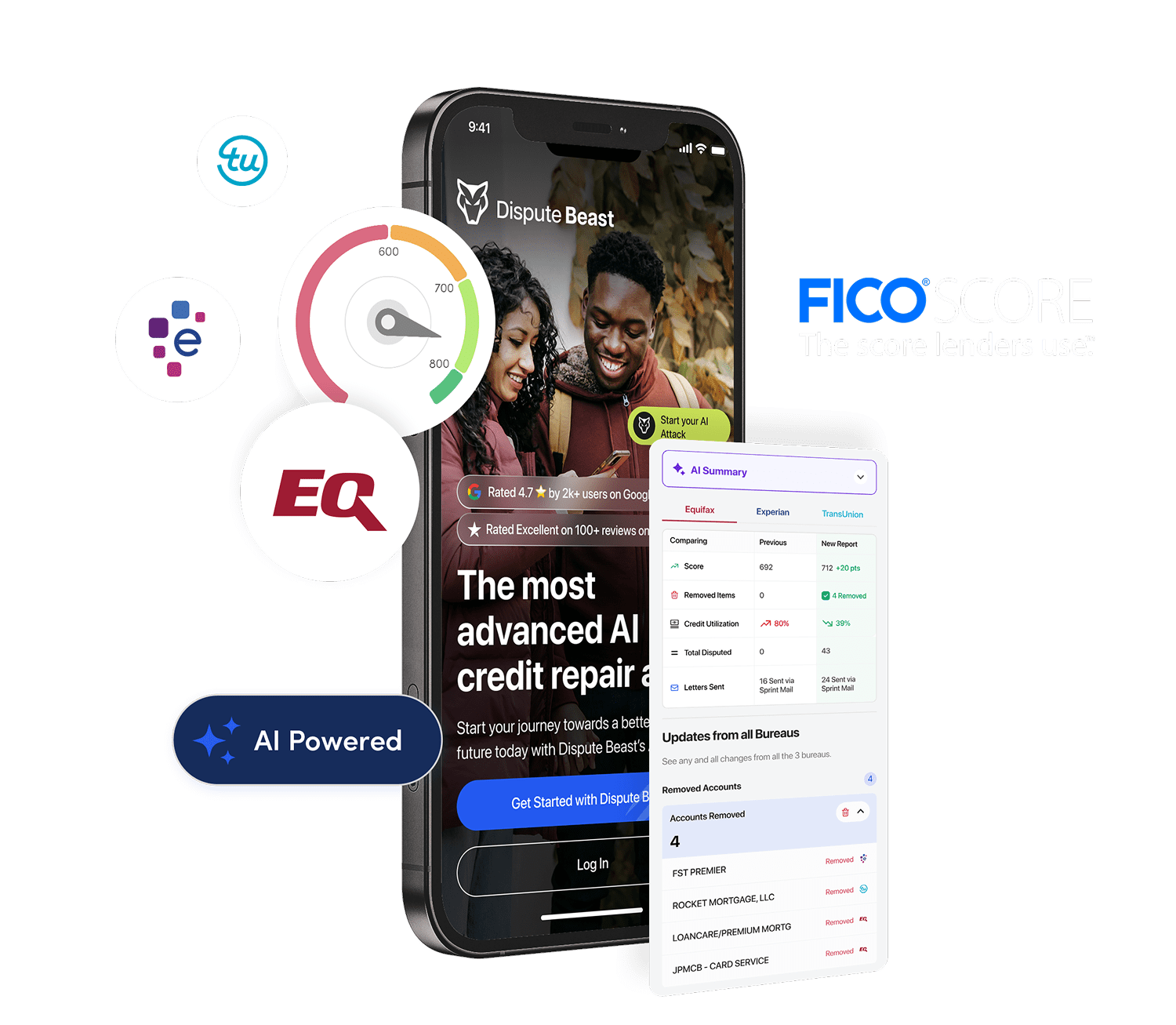
Users simply upload their report, press one button, mail the letters, and repeat. AI handles the heavy analysis, and the user stays fully compliant every round.
If you’re ready to automate your credit disputes with an AI-powered system designed for 2026, start your free Dispute Beast account today and begin your next attack cycle with a single click.