

The Mental Model Most Borrowers Get Wrong
Most borrowers believe that loan approvals are driven by a single number. Credit scores are marketed as the ultimate indicator of financial trustworthiness, and many people assume that crossing a certain score threshold guarantees approval. This belief is understandable, but it is fundamentally flawed. Lenders do not approve loans based on scores alone. They approve loans based on risk narratives embedded inside full credit profiles.
A credit score is a shortcut. A credit profile is evidence. When lenders evaluate an application, they look beyond the score to understand behavior, stability, accuracy, and timing. A borrower can have a strong-looking score while carrying unresolved risks that halt approvals instantly.
This mental model gap explains why many applications stall even when the score appears “good enough.” Credit scores open the door. Credit profiles decide whether you walk through it.
What a Credit Score Actually Represents
Credit scores are predictive tools. Models like the FICO credit scoring model and VantageScore analyze historical credit behavior to estimate the probability of default. They evaluate payment history, credit utilization, account age, credit mix, and inquiry activity. The output is a number designed to help lenders quickly segment risk.
However, scores do not explain context. They do not verify accuracy. They do not communicate lender-specific risk tolerance. Most importantly, they do not replace underwriting logic. Scores compress complex data into a simplified signal, which means critical nuance is lost.
This is why lenders never rely on scores alone once an application reaches review.
The Credit Profile: The Real Lending Language
A credit profile is the complete credit report as interpreted by underwriting systems. It includes account-level data, reporting patterns, timelines, and discrepancies. Lenders evaluate profiles to understand consistency and credibility.
Key profile elements include:
- Accuracy of account statuses
- Balance reporting patterns
- Payment timelines
- Inquiry clustering
- Account seasoning
- Presence of unresolved credit report disputes
- Data furnisher reliability
Each of these elements shapes lender confidence. A score may remain stable while the profile deteriorates underneath it.
Why Good Scores Still Get Declined
Borrowers often assume that rejections with strong scores are mistakes. In reality, they are signals. A lender may see elevated utilization across multiple accounts, recent inquiry stacking, or unresolved derogatory items that introduce uncertainty.
For example, two borrowers may each have a 720 score. One maintains low balances, stable reporting, and long-term accounts. The other carries high utilization, recent disputes, and inquiry clustering. The scores match. The risk does not.
Lenders approve profiles, not numbers.
Risk Stacking and Lender Psychology
Underwriting systems evaluate how risks combine. This process is known as risk stacking. One moderate-risk signal is rarely decisive. Multiple moderate risks together change the probability model.
High utilization combined with inquiry velocity and recent negative reporting creates a risk pattern that automated systems flag. Even if the score remains acceptable, the stacked risk halts approvals.
Automated Underwriting Systems Explained
Most lenders rely on automated underwriting systems to process applications. These systems ingest raw credit report data and apply decision rules. They evaluate relationships between variables rather than isolated metrics.
Automated systems flag inconsistencies, timing anomalies, and credibility gaps. When a flag is triggered, the application may be paused, downgraded, or routed to manual underwriting. This happens long before a score becomes the deciding factor.
Manual Underwriting: Where Accuracy Becomes Critical
Manual underwriting occurs when a human analyst reviews the credit profile. Analysts examine account histories, dispute activity, and reporting patterns. However, they still rely on the accuracy of the credit report itself.
If the data contains errors, manual underwriting rarely resolves in approval — and consumers still have the right to dispute inaccuracies under federal credit report dispute rules. Instead, the file is delayed or declined pending correction. Accuracy is a prerequisite, not a bonus.
Thin Files vs Thick Files
Thin credit files often produce deceptively high scores. With limited data, fewer negatives exist to suppress scoring models. However, lenders prefer thick files that demonstrate long-term behavior.
A borrower with a slightly lower score but extensive, consistent history often presents less risk than a borrower with a high score built on minimal data. This distinction explains many unexpected denials.
Why Reporting Consistency Matters
Lenders compare data across bureaus. Inconsistencies raise compliance concerns. If one bureau reports a balance differently than another, or if an account appears duplicated, lenders question reliability.
Consistent reporting signals stability. Inconsistent data signals uncertainty.
Where Credit Report Errors Quietly Destroy Approvals
Many profiles contain credit report errors that do not significantly affect scores but still damage approval odds. These include outdated derogatory dates, incorrect account statuses, duplicate collections, and unverified reporting.
Scoring models may discount these errors. Lenders do not.
Timing: The Invisible Approval Factor
Lending decisions are time-sensitive. What appears on the report at the moment of underwriting matters more than what will be corrected later. If an error exists during review, it becomes part of the decision record. Even if those items are later corrected, the original application outcome rarely changes.
This timing mismatch explains why lenders often recommend reapplying after corrections are completed, and why understanding the credit repair process matters before submitting applications. Underwriters don’t speculate on what your file will look like next month. They decide based on what is verifiable today.
Stability vs Volatility
Lenders favor stable profiles. Rapid score increases caused by temporary optimization may introduce suspicion if the underlying profile remains volatile. Stability builds trust. Volatility invites scrutiny.
This is one reason lenders sometimes view sudden “score jumps” skeptically—especially when they coincide with recent new accounts, large balance shifts, or dispute activity. Stability is not just about your numbers; it’s about your pattern.
Why Uncertainty Is Worse Than Risk
Risk can be priced through interest rates and loan terms. Uncertainty cannot. When data is inaccurate or inconsistent, lenders choose conservative outcomes.
A lender can approve a moderately risky borrower and price the loan accordingly. But if the credit file contains conflicting signals—duplicate accounts, mismatched balances, unresolved disputes—the lender can’t accurately model the risk. In that scenario, the safest choice is to pause or decline.
How Lenders Interpret Recent Credit Activity
Recent activity carries disproportionate weight in underwriting. Lenders evaluate how borrowers behave in the months leading up to an application. New accounts, balance shifts, and dispute activity are interpreted as signals of financial stress or transition.
Even positive changes can raise questions if they appear sudden or unseasoned. A borrower paying down balances is good—but if balances drop sharply right before applying, an underwriter may wonder whether funds were borrowed elsewhere or whether spending patterns are unstable. Lenders prefer established patterns over last-minute improvements.
Inquiry Clustering and Intent Analysis
Lenders analyze inquiry clustering to infer intent. Multiple inquiries across similar product categories suggest credit shopping. While rate shopping is expected in some contexts (like mortgages or auto loans), excessive clustering outside those windows raises red flags.
Intent analysis helps lenders distinguish strategic borrowing from distress behavior. A few inquiries in a focused window can look normal. Scattered inquiries across multiple categories can look like liquidity pressure.
Approval Downgrades Explained
Not all applications end in approval or denial. Many are downgraded. A downgrade may result in higher interest rates, lower credit limits, smaller approved amounts, or additional conditions. Downgrades occur when profiles contain manageable risk but lack clarity.
For borrowers, downgrades feel like “I got approved, but it’s not worth it.” For lenders, downgrades are a compromise: proceed, but protect the portfolio. Cleaner profiles reduce downgrade likelihood.
Conditional Approvals and Documentation Requests
Conditional approvals often arise when profiles show inconsistencies. Lenders request additional documentation to compensate for unclear credit data—proof of income, proof of assets, explanations for derogatory events, or letters of explanation for inquiries.
This slows the process and increases friction. Accurate profiles minimize conditional hurdles by reducing the need for “extra proof” to offset unclear credit signals.
Why Profile Maintenance Is Ongoing
Credit profiles evolve continuously. New reporting errors, balance updates, address changes, and inquiry data appear regularly. Even borrowers who “fixed their credit” once can see new inaccuracies later.
Ongoing monitoring and correction maintain profile health over time, especially for people who apply for loans periodically (mortgages, auto loans, business credit, credit limit increases).
Long-Term Lending Confidence
Lenders track borrower behavior across multiple interactions. A consistent, accurate profile builds institutional trust over time. That trust can improve approval speed, reduce manual review frequency, and lead to better terms.
This is why serious borrowers think in years, not days. They maintain a profile that signals reliability long before they need capital.
Why Profile Integrity Outperforms Score Optimization
Score optimization focuses on manipulating variables that influence scoring formulas. Profile integrity focuses on ensuring that every data point reported is accurate, timely, and compliant. Lenders trust integrity more than optimization.
Optimization can produce temporary improvements. Integrity produces durable credibility. Underwriting is built to reward credibility.
The Cost of Ignoring Profile Errors
Uncorrected errors accumulate. Over time, they increase uncertainty and reduce approval odds across multiple applications. Small inaccuracies become larger issues when lenders see them repeatedly across different lending decisions.
Early correction prevents compounding damage and reduces the likelihood that a single error becomes the “reason” your file gets flagged again and again.
Building Approval Momentum
Clean profiles create momentum. Each successful application reinforces lender confidence and improves future outcomes. Momentum begins with accuracy, stability, and predictable reporting patterns.
When your profile consistently reflects low-risk behavior, you stop fighting uphill battles with every new application.
How Dispute Beast Aligns With Lender Logic
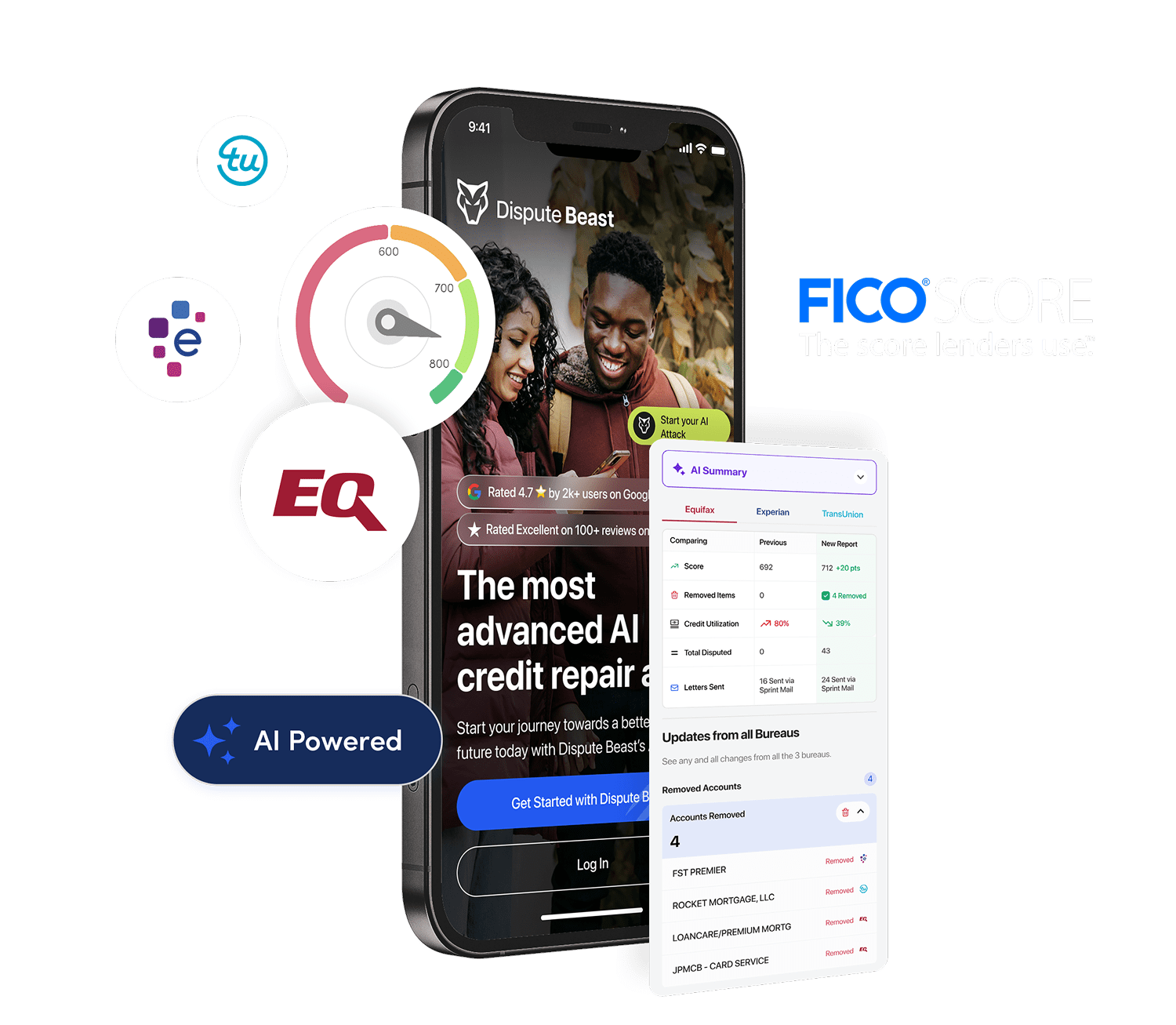
Dispute Beast is designed around profile integrity rather than superficial score movement. By identifying inaccurate negative items and generating compliance-based dispute letters, it helps restore credibility to the credit file.
This approach aligns with lender logic. Clean data reduces uncertainty. Reduced uncertainty improves underwriting outcomes. It’s not about chasing a number—it’s about removing doubt from the evidence lenders review.
The Shift From Score Chasing to Profile Discipline
Borrowers who succeed long-term focus on maintaining accurate reports, controlled application behavior, balanced utilization, and timely dispute resolution. These habits strengthen profiles beyond numerical scores.
Instead of asking “How can I get 20 points fast?” disciplined borrowers ask “What in my file creates doubt?” and “What signals stability over the next 6–12 months?”
Final Takeaway
Credit scores summarize behavior. Credit profiles prove it. Loans are approved on proof, not summaries. When borrowers focus on profile integrity, approvals follow naturally.
When the data is clean, consistent, and verified, lenders move forward with confidence and speed.
That confidence is the true currency of credit approvals.
Profiles earn trust. Trust unlocks capital.
Understanding this framework allows borrowers to align actions with underwriting reality rather than marketing myths.
Alignment is what transforms applications into approvals.
It is not about chasing perfection, but about removing doubt.
Doubt is what lenders avoid at all costs.
And removing doubt begins with the credit profile.