

Credit monitoring has become almost universal. Millions of consumers receive alerts every week telling them their score changed, a new account appeared, or an inquiry was added.
Yet lenders continue rejecting applications for people who actively monitor their credit.
This raises a critical question:
If credit monitoring works, why do so many approval-killing errors still slip through?
The answer is uncomfortable but simple: alerts are not analysis. In 2026, that distinction determines whether you get approved or denied.
This article explains the real credit monitoring limitations, how alerts differ from enforcement, and why dispute intelligence is the missing layer lenders actually care about.
What Credit Monitoring Is Actually Designed to Do
Credit monitoring tools are notification systems, not validation systems.
They are designed to surface changes such as:
- New accounts
- New inquiries
- Balance updates
- Score movement
These alerts are useful for awareness and early fraud detection. They keep consumers engaged.
But they do not answer the question lenders base approvals on:
Is this data accurate, compliant, and reliable?
Why Alerts Don’t Mean Accuracy
Monitoring systems assume the data they receive is correct.
If a furnisher reports a late payment, the alert fires. If a balance updates incorrectly, the alert fires. If a collection re-ages improperly, the alert still fires.
What monitoring tools do not evaluate:
- Metro 2 compliance
- Furnisher reporting authority
- Internal data consistency
- Cross-bureau discrepancies
Lenders don’t care whether you were notified. They care whether the data is accurate.
The Errors Credit Monitoring Misses Most Often
Misreported late payments
A single inaccurate late payment can derail approvals even when scores remain strong.
Incorrect balances and utilization
Utilization thresholds matter. Monitoring apps rarely flag outdated or inconsistent balances.
Duplicate or re-aged collections
Collections often appear multiple times or update incorrectly across bureaus.
Mixed-file data
Accounts belonging to someone else can appear due to similar identifiers.
Inconsistent bureau reporting
The same account may report differently to Experian, Equifax, and TransUnion.
Why These Errors Cost Loan Approvals
Lenders do not approve based on alerts. They approve based on risk models.
Those models weigh:
- Utilization accuracy
- Payment history consistency
- Derogatory severity
- Inquiry behavior
Even small inaccuracies can push an application outside approval tolerances.
This is why borrowers often ask:
“Why was I denied when my score looked fine?”
The answer is usually hidden in data monitoring never challenged.
Credit Monitoring vs Dispute Intelligence
| Function | Monitoring | Dispute Intelligence |
|---|---|---|
| Alerts on changes | Yes | Yes |
| Detects inaccuracies | No | Yes |
| Analyzes compliance | No | Yes |
| Prioritizes lender-impacting errors | No | Yes |
Monitoring is passive. Dispute intelligence is corrective.
Why AI Analysis Is the Missing Layer
AI systems do more than display data. They analyze patterns.
AI-driven analysis can:
- Compare reporting across bureaus
- Detect inconsistencies humans miss
- Identify errors lenders penalize most
- Prioritize disputes by approval risk
This is why AI detection is the natural evolution beyond monitoring.
Learn more about how AI detects credit report errors before they hurt your score.
Why Monitoring Alone Creates False Confidence
Alerts create comfort. Comfort delays action.
Delayed disputes allow inaccurate data to sit longer, increasing denial risk.
By the time a lender flags the issue, fast correction is often impossible.
How Dispute Beast Closes the Gap
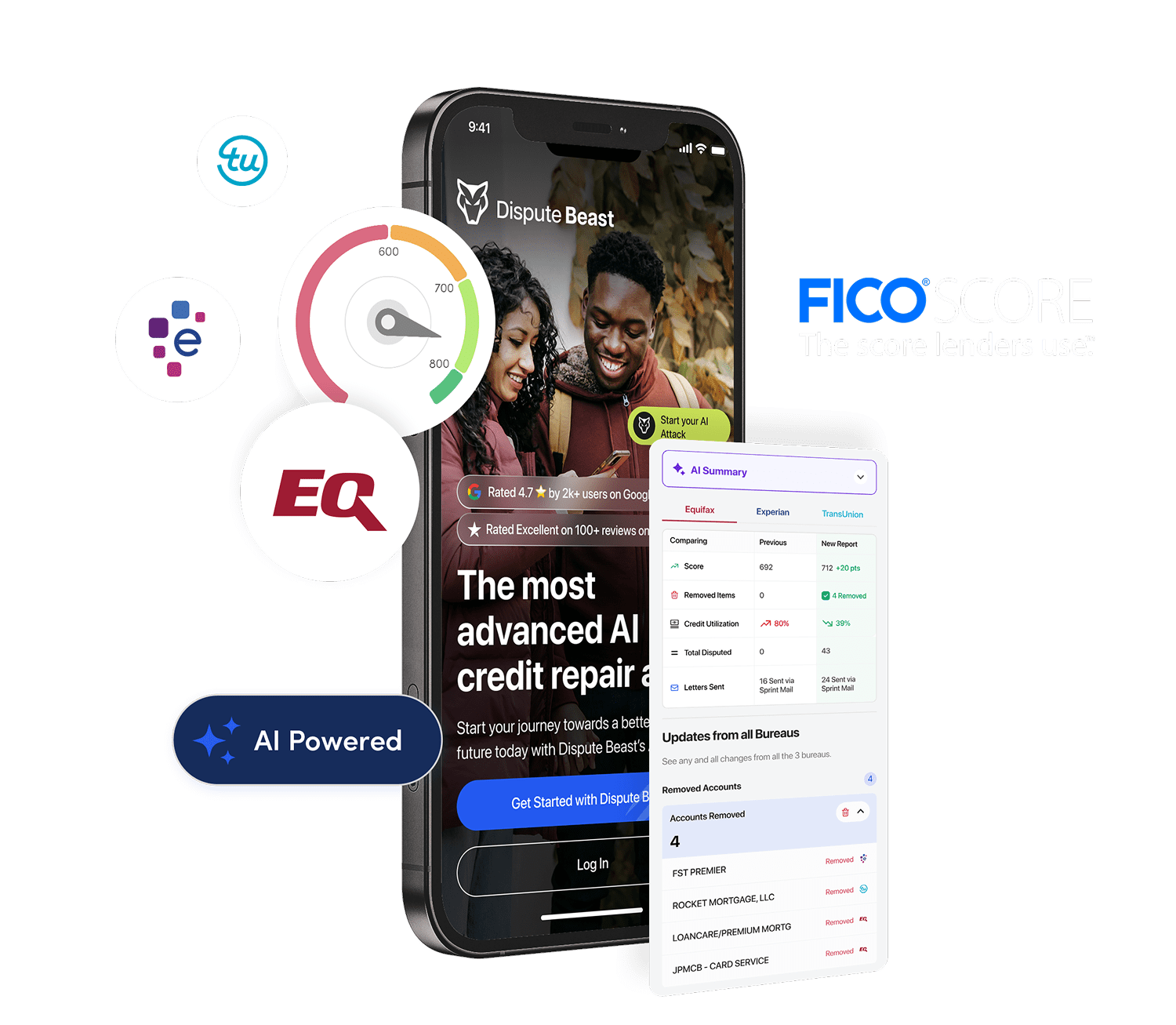
Dispute Beast operates where monitoring stops.
It analyzes reports every 40 days, identifies inaccurate or non-compliant data, and generates compliance-based dispute letters.
Its three-level attack strategy targets:
- Credit bureaus
- Data furnishers
- Secondary bureaus
Dispute Beast is free with an active subscription to Beast Credit Monitoring or Pro Credit Watch, combining visibility with enforcement.
Why Lenders Are Less Forgiving in 2026
Automated underwriting systems penalize inconsistency.
AI lending models reduce tolerance for:
- Data mismatches
- Unresolved derogatories
- Reporting instability
Final Takeaway
Credit monitoring shows you what changed.
It does not tell you whether that change is accurate or costing approvals.
In 2026, approvals depend on accuracy, not visibility.
Next steps:
- Read the Ultimate Dispute Beast FAQ
- Get your free Dispute Beast account at DisputeBeast.com
- Keep attacking every 40 days so new errors never settle in