
You apply for a loan or credit card with what you believe is a “good” credit score — maybe 680, 700, or even higher — and still get denied. It’s frustrating, confusing, and for many consumers, completely unexpected.
The truth is this: lenders look far beyond your credit score. Modern underwriting systems evaluate your entire credit profile, including debt ratios, utilization patterns, inquiries, and the accuracy of your report. This means you can have a good score on paper but still fail automated underwriting checks.
This guide explains exactly why lenders reject applications even when your score looks strong, what hidden factors matter most, and how inaccurate negative items — which Dispute Beast can identify and remove — often play a huge role in those denials.
For a deeper understanding of hidden report problems, review our pillar guide on credit report errors.
The Biggest Myth About Credit Applications: “Good Score = Approved”
Consumers believe loan approvals work like this:
“If my score is good, I’m good.”
But lenders don’t lend based on credit score alone. A good score is only one piece of a much larger financial picture. In fact, modern underwriting models — especially the versions used for mortgages, auto loans, and high-limit credit cards — rely on dozens of data points.
Here are the factors that most commonly override a good score and lead to a denial.
Reason #1: Your Debt-to-Income Ratio Is Too High
If there’s one factor borrowers underestimate, it’s DTI (Debt-to-Income Ratio). Even borrowers with scores in the 700s get denied every day because of high DTI.
Lenders calculate it by comparing your monthly debt obligations with your income. A strong credit score doesn’t offset the risk of someone who already has too many financial commitments.
Typical lender thresholds:
- Below 36% = Strong approval odds
- 37–49% = Conditional or higher interest rates
- 50%+ = High-risk → frequent denials
Your score cannot compensate for high DTI. Even worse, inaccurate balance reporting can push your DTI higher than it actually is.
Reason #2: High Utilization Signals Short-Term Financial Stress
Lenders heavily evaluate your credit utilization, not just your score. Even if your score remains relatively stable at high utilization, lenders see something different:
“This person is using too much of their available credit. They may be financially strained.”
High utilization is a major denial trigger even for individuals with good payment history and long credit age.
Experian explains the impact of utilization in its credit utilization guide.
The most common utilization-related reasons for denial are:
- One card above 70% utilization
- Total utilization above 30%
- Recent spike in balances
- Misreported or outdated balances
Many balance-related denials come from credit report errors that artificially inflate your utilization without your knowledge.
Reason #3: Derogatory Items Lenders Hate — Even If Your Score Is Recovering
Your score can rise after a negative item ages, but the item still appears on your report — and lenders still react to it.
Derogatory items that lead to denials include:
- Collections (even paid ones)
- Charge-offs
- Past-due accounts
- Late payments in the last 24 months
- Repossession or foreclosure
Even if your score has bounced back, these items signal risk.
Worse: many of these derogatories are inaccurate or outdated, yet they still block approvals until removed.
Reason #4: Too Many Hard Inquiries or Inquiry Clusters
Lenders evaluate inquiries very differently than scoring models. While scoring models typically treat inquiries lightly, lenders interpret them as behavior patterns.
Inquiry clustering — multiple hard pulls within short periods — signals that you may be:
- Desperate for credit
- Experiencing financial instability
- Applying for loans elsewhere and possibly denied already
If you have unauthorized inquiries, review how to dispute them using our guide on hard inquiry disputes.
Reason #5: Inaccurate Negative Items That Algorithms Flag Instantly
This is one of the most overlooked reasons consumers are denied credit.
Underwriting systems are extremely sensitive to data anomalies, such as:
- Incorrect dates of delinquency
- Duplicate collections reporting as two different debts
- Mislabeled late payments
- Balances that don’t match reporting cycles
- Closed accounts showing as open
- Accounts belonging to someone else with a similar name
Even a small reporting error can change an approval into a denial.
More importantly: you can have a good credit score and still be denied because of inaccurate negative data.
This is exactly why internal linking to our pilar article on credit report errors is critical for SEO and user education.
Reason #6: Lenders Look at “Risk Patterns,” Not Just Scores
Lenders use advanced underwriting algorithms that score you on more than just your FICO number. Many use internal metrics or AI-driven risk models.
These systems analyze patterns such as:
- Recent balance spikes
- New credit behavior
- Length of time since last delinquency
- Stability of your credit usage
- Number of accounts with balances
Even if your score is 700+, risky patterns create automatic denials.
Reason #7: Mixed or Inconsistent Data Between Bureaus
One of the most common hidden reasons for denial: your three credit bureaus don’t match.
Underwriting systems interpret inconsistent data as unreliable data — which leads to automated “decline” decisions.
Examples include:
- Different balances across bureaus
- Status mismatches (open vs. closed)
- Different late payment dates
- Missing payment history on one bureau
- Duplicate collections reported differently
This is a huge red flag for financial institutions.
Why Errors in Credit Reports Lead to So Many Rejections
Credit report errors are far more common than most consumers know — and lenders hate them. Errors make your profile riskier and less predictable.
This is why Google is rewarding pages related to “what lenders see,” “what lenders look at,” and “why was I denied.” The intent is aligned with correcting inaccurate report data, not traditional credit repair messaging.
Even the CFPB acknowledges widespread inaccuracy in consumer credit files in its industry accuracy report.
How Dispute Beast Helps Identify Errors Lenders Hate
Underwriting algorithms don’t just review your score — they scan for inconsistencies, mismatches, and risk signals.
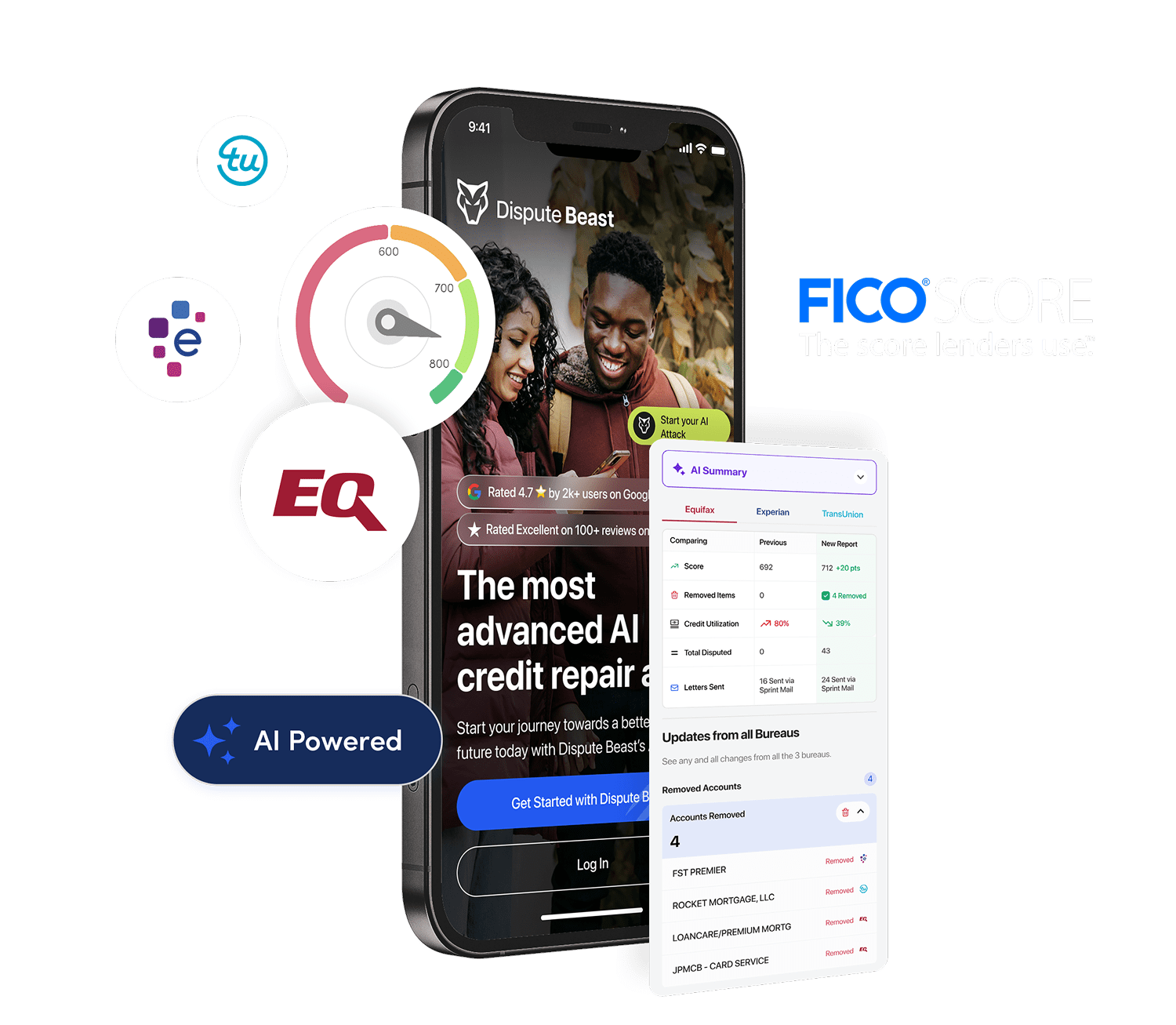
Dispute Beast helps you eliminate those issues through:
✔ AI-Powered Error Detection
Dispute Beast scans every line of your credit report across all three bureaus, identifying:
- Incorrect late payments
- Duplicate accounts
- Balance discrepancies
- Incorrect delinquency dates
- Misreported utilization
These are the issues most likely to trigger a denial.
✔ Automated Dispute Letter Generation
Using compliance-based Metro 2 logic, Dispute Beast creates powerful dispute letters tailored to each error, increasing the chance of deletion or correction.
✔ 40-Day Attack Cycles
Every 40 days, Dispute Beast reanalyzes your reports and generates new dispute letters automatically until the negative items are corrected or deleted.
✔ Integration With FICO and Vantage Scoring Models
Dispute Beast uses the same models lenders use, allowing it to identify which errors are most damaging to your approval chances.
How to Improve Approval Odds Even If Your Score Is Already “Good”
1. Lower Your Utilization Below Key Thresholds
The most important utilization thresholds are:
- Below 49%
- Below 29%
- Below 9%
Small utilization improvements can significantly increase approval odds.
2. Remove Inaccurate Derogatory Data
This includes incorrect:
- Late payments
- Collections
- Charge-offs
- Utilization spikes caused by wrong balances
3. Eliminate Unauthorized Inquiries
Even a few unauthorized inquiries can block credit approvals.
4. Ensure All Three Bureaus Match
Consistency across bureaus is one of the strongest approval signals for automated underwriting.
Final Thoughts: A Good Score Isn’t Enough — Accuracy Is Everything
Lenders don’t reject you because your score isn’t good enough. They reject you because your credit file contains risk signals — many of which come from inaccurate, outdated, or misreported information.
If you want to understand what lenders dislike most, read our full guide on credit report errors.
And if you’re ready to eliminate those errors automatically, Dispute Beast helps you:
- Detect inaccuracies instantly
- Generate personalized dispute letters
- Run automatic 40-day dispute cycles
- Clean up report data lenders hate
A good score gets attention — but a clean and accurate report gets approvals.